Most dystopian depictions follow along the same story line. In the beginning, what appears to be a utopian society is displayed. Everyone is happy, birds are chirping, money falling from the sky…(maybe not the money but you get the picture). Then, DUN DUN DUN! The working class appears. Turns out goods and services are not made themselves and everyone can not just live a happy and simple life. The working class is depicted in harsh labor conditions, everything is dark, dreary clouds fog the scene, a baby cries in the distance. Next, the biggest plot twist of them all. The working class gets enraged and storms the upper class. The upper-class then realizes their wrong doings and join forces with the lower class while everyone sings Kumbaya.
The above is an extremely simple description of the story “Metropolis”. There are many similarities between this story and “The Time Machine”. One of the similarities that intrigued me the most is that the workers lived underground and the rich lived a beautiful area above ground in both stories. This is a great depiction to help the audience visualize the differences in living conditions between the upper and lower classes. One is dark and dreary, the other is a bright paradise. In both stories, the working class end up targeting the lofty rich folks. However, there are some notable differences in the stories.
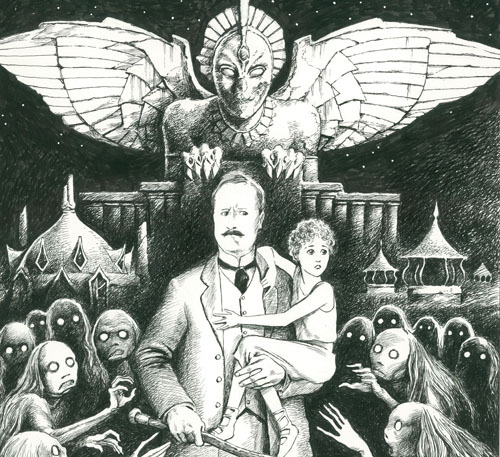
The idea that I found interesting in “The Time Machine” that was not adequately shown in “Metropolis” is the way in which people were altered over time. The novella “The Time Machine” uses a hyperbole to depict how the different classes evolve over time. The upper class (labeled as Eloi) have become extremely delicate, simple creatures. This shows how the lifestyle of the rich will one day turn them into naive, unintelligent people. In complete contrast to this, the lower class people have morphed into a sort of monsters that live in dark tunnels underground and feed on the Eloi. This depicts how the suffering and anger of the working class can morph into hatred and aggression towards the upper class. Unlike “Metropolis”, the divided groups do not come together in the end to work in understanding, but rather what was once the upper class lives in fear of what has become of the working class. I found “The Time Machine” much more plausible if one can get passed the exaggerations often used by Wells.
 Kayla's Sci-Fi Blog
Hello, Thomas here from class. I liked your comparison of the two works. Metropolis is one of my favorite movies so I thought your simplification of its plot and structure to be very funny. I also find it interesting how the two classes in The Time Machine morph into almost completely different species; it is very telling of what Wells is trying to say.
LikeLiked by 1 person