“The sun… it wasn’t our sun, evenly distributed over the mirrored surface of the sidewalks. This sun was all sharp fragments, alive somehow, constantly leaping spots, that blinded the eyes and made the head spin.”
Zamyatin, Yevgeny Ivanovich, and Clarence Brown. We. Penguin Books, 1993.
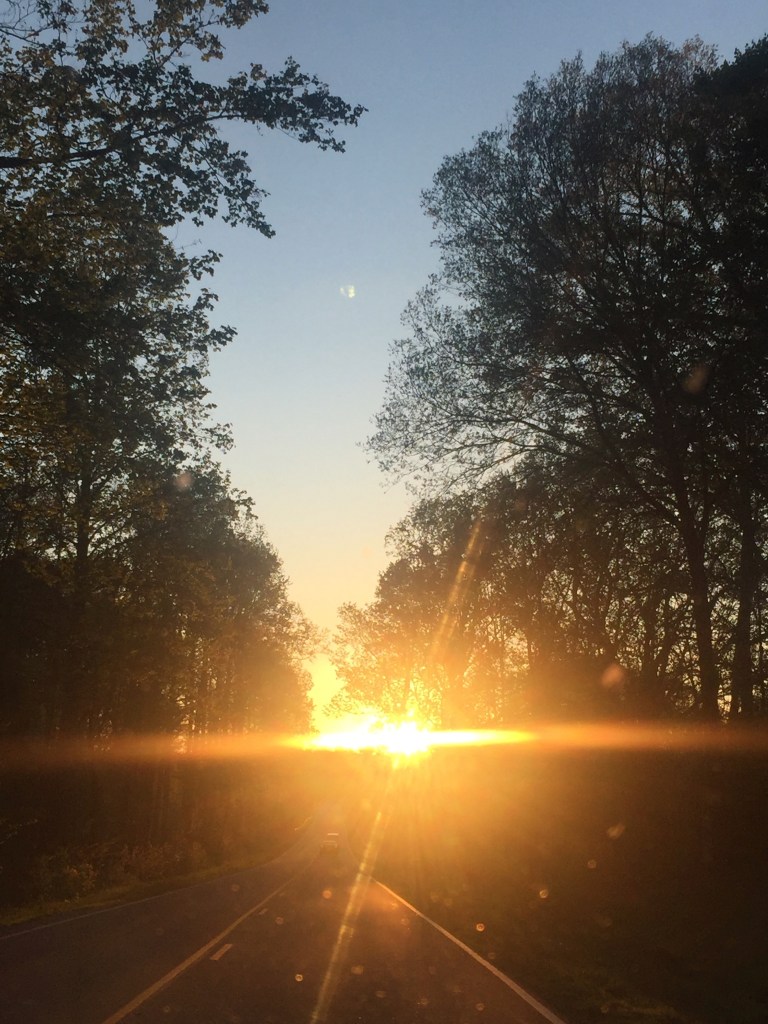
Throughout the novel, civilization is viewed as a safe-haven filled with exact numbers, certainty, happiness and logic. Nature is described as wild, primitive, and deadly. Civilians of One State believe that the 200-years-war has eradicated this so-called wild nature and replaced it with a civilization built on such logic that every single person agrees on everything. No independence, no stress. No love, no confusion. People are tiny, replaceable parts to a machine; all working flawlessly in-sync. As in many dystopian novels, the ideals of the perfect civilization go quickly out the window as the novel progresses.
People are not machines, nor parts of a machine. People have thoughts and ideas that they themselves cannot control, which makes the idea of someone else attempting to control their mind even more absurd. Mankind is driven by desires; he will build a city only to burn it down because the grass is always greener on the other side. No matter how hard a person clings to their logical, civilized side, there will always be that part of them that belongs to wild nature from which stems love, jealousy, curiosity, power-hunger, and desires. D-503 is a great example of this.
From the very beginning of the novel, D-503 portrays himself as the ideal One State civilian. Creator of the INTEGRAL, mathematician, rule follower. However, one characteristic of D-503 is pointed out repeatedly: his hairy hands. He despises his own hands as it connects him to his primitive forebears. This is foreshadowing for later on in the novel, when I-330 states “You, too, probably have a drop or two of that sunny forest blood,” (Zamyatin 157). The people living outside the wall in wild nature have facial hair and wear animal furs, in contrast to civilians of One States and their grey yunies. D-503 wore a grey yunie, a symbol of civilization, yet his shaggy hands were a constant reminder or his primitive, wild side. This novel contains a sad bit of irony. D-503 appreciates his societal system and wants to be a part of the larger machine, yet he can not quash that pesky thing he feels for I-330. Love. As unpredictable, uncontrollable, and therefor as dangerous as wild nature. D-503 struggles between doing what he believes is right (reporting to the Bureau of Guardians) and what he desires. Eventually he gives in to his desires. His carefully constructed world burns as he laughs.
In the end, D-503 rejoins civilization, his world pasted back together after extraction of the part of his brain that fuels his wild side. However, rebels are still out there and revolution is inevitable. Wild nature is uncontrollable as civilization is organized. Neither will triumph eternally as mankind is a combination of wild emotions and logical cultivation.
 Kayla's Sci-Fi Blog